

Conventional opinion has it that one of the sillier things one might do is to build a recording studio in a rural area. It is a well-known rule that even a studio built in central London, where all the musicians live, is a pretty bonkers idea from a business point of view.
I did that before in Wardour Street and a cleverer version of me might’ve remembered what a nightmare it was. I know the whole thing is folly, but I remain delighted that we failed to read the runes and did it anyway.
My logic, if it could be called that, was (I) I have a big old empty barn (II) I like making music (III) I don’t much like going to London (IV) if I make the old barn into a recording studio, all my pals will come to see me (V) the What3Words for the barn is ///excellent.confused.notes, which is clearly a sign that I must build a recording studio. Having put these ‘facts’ into my strategy wok and given them a good stir fry, I concluded I should set to, and do it at once.
I did not consider (a) whether the musicians would want to come (b) what was involved in building a fully sound-proofed, top-of-the-range facility during lockdown, in a field without sufficient power and the internet connectivity of the moon (see blog ‘Harmony in the hayloft, how to turn a barn into a recording studio for details).
Full of the bulldog spirit, I reasoned that the pyramids were built in a rural area and they worked out ok, so we broke ground in January 2020 just as Boris told us to go home and break out the box sets, while he got on with his party planning.

We got a glimmer of the challenges we were likely to face as a rural business early on. Building control rooms is a demanding and very specialist business requiring specific construction materials, laser accuracy, unfathomable drawings and calculations that would have Albert Einstein scratching his head. The specialists couldn’t come to see us because there was nowhere they could stay during lockdown.
I reasoned that since amateurs built the arc and professionals built the Titanic, we could still do this with our local talent, so I turned to some charming, apple-cheeked villagers who had saws, hammers and things. They turned me down flat. Eventually we found an amazing man from Bury St. Edmunds who turned out to be a walking, talking Stephen Hawking, and he did understand the drawings and loved the challenge. Anyway, all this is in the other article, so let me return to the matter in hand.
One of rural Britain’s big issues is internet connection. In Little Maplestead the Information Superhighway is at best a muddy footpath, and you really do need a good connection with all the music and film files we have to down and upload – not to mention the regular remote sessions we do with composers and artists all over the world.
In the end we managed to persuade County Broadband to bring fibre to us (remarkably) and with that and Elon’s Starlink for backup we were super fast.
Next, electricity. We need a three-phase supply for both the farm here and the studio. Most trees around us spend their days looking for ways of falling on power lines and whilst, to be fair, this only happens rarely, when it does it can be days to get things working again. One thing I know about sessions is that people get peevish if the lights go out, so we bought a huge generator capable of running everything. We have only used it once in earnest, but I am delighted to say it worked perfectly and not a moment was lost in the recording.
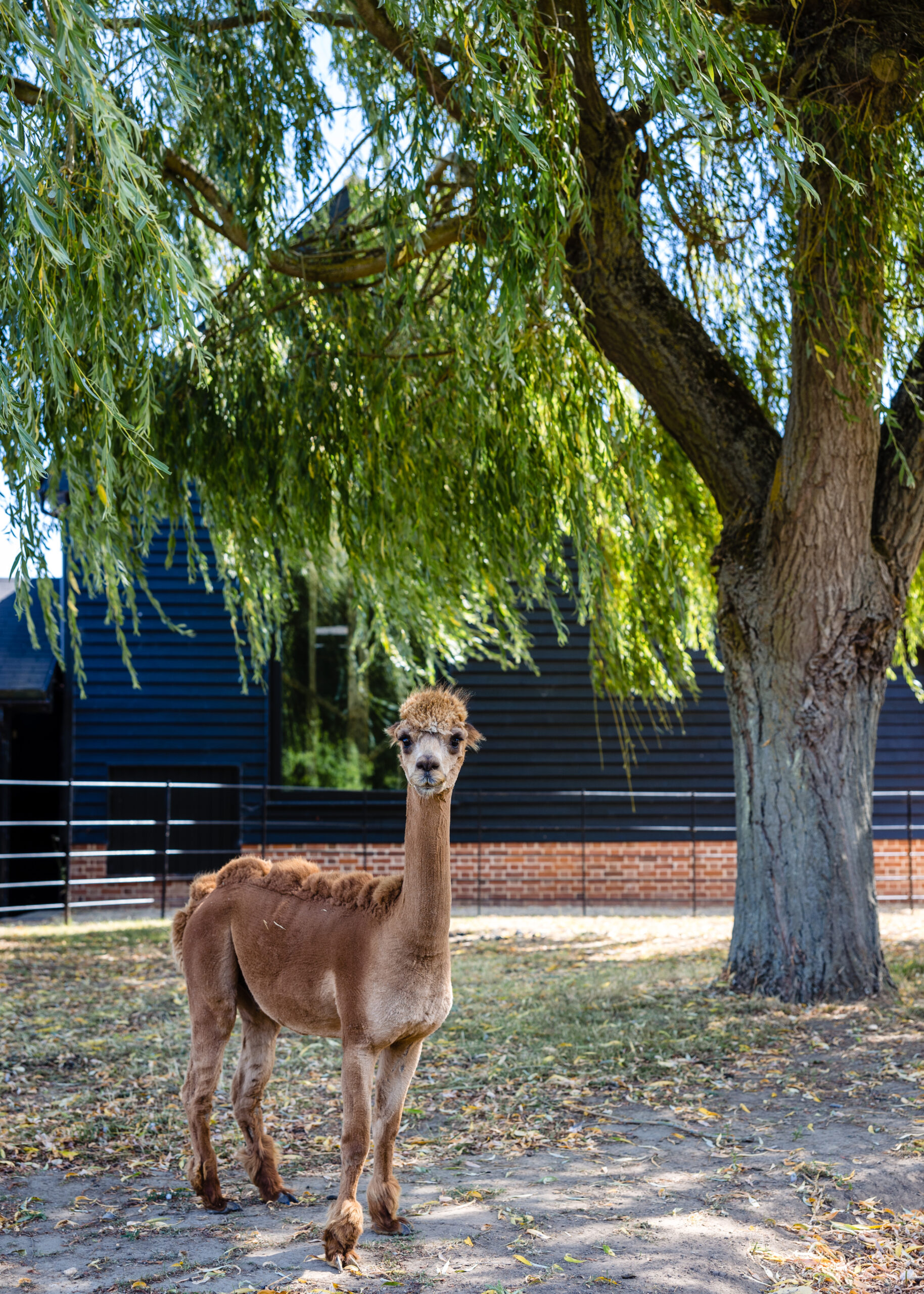
Next is perception. We are 40 miles from Central London as the crow flies, but since very few of our clients are corvids, it might take you an hour-and-a-half on a sticky day and originally we thought this might be a major barrier. As it turns out it has been quite the opposite. All the musicians I’ve spoken to love an away-day and appreciate being able to park outside the door. Also, many of them stay over, which is fun. They enjoy the novelty of working on a farm with sheep and alpacas to tease and, since the region isn’t known for its food retail offerings, we always feed them at lunchtime.
We have also been amazed at how many of the musicians I’ve known and worked with for years at Abbey Road live in our general direction and putting together groups and ensembles of all types with top class players has been no problem at all. Every single regular player I work with – well, actually, apart from one – travels out to us happily whenever asked. I’m working on the one.
Another perception challenge is to convince people that coming out to us doesn’t in any way compromise the excellence of technology and skills available. There is a danger that we talk too much about our bucolic charms, and folks think we are all about making daisy chains, doing alpaca yoga and using microphones fashioned from straw.
To confront this I gave our engineer, Stefano Civetta, carte blanche to choose his dream equipment and microphone list. This is like putting Shane MacGowan in charge of the swear box, and after a couple of days, I had a terrifyingly long list. I enquired, gently, is all was strictly necessary. This didn’t lead to an argument, but after a noisy exchange of ideas, I swallowed hard and got everything he wanted in the hopes that people would realise we are serious and not cutting any corners.

After a slow start in 2022, I am pleased to say the momentum for the studio has built beyond what I could have possibly imagined. We have welcomed many household names through our doors, but more importantly, we have had the privilege of making exceptional music with some of the most talented and delightful people imaginable and I’ve made countless new friends. At the beginning of this article I said the whole thing was a ridiculous idea, but I am glad I did it. Here’s why:
First, I have to acknowledge my amazing core team of Stefano and Hester. Not only are they both in very different ways ludicrously talented, they also have that genius for making everything fun and everyone feel welcome and special.
Working with them in this beautiful part of England in the middle of our farm, with many of the world’s finest musicians is a privilege that astonishes me every day. It might sound fanciful, but I honestly find music-making is different outside cities. Things are more relaxed and easy-going. I have always known that relaxed, happy people make the best music, but I could never have expected we’d be lucky enough to do such a wide variety of projects or make so many friends along the way.
